









The 5 Best Bicep Exercises for Building Bigger Arms | Crunch Fitness
June 5, 2026
Building bigger arms is easier than you might think. All you need are the right bicep exercises and a solid plan. Curious about which moves work best for size and strength? This guide will show you.
Your biceps are important for arm shape, pulling strength, and daily upper-body tasks. Not every bicep exercise is equally effective for building bigger arms.
In this guide, we’ll cover five proven exercises that boost muscle growth by working both parts of your biceps and key supporting muscles like the brachialis and brachioradialis.
You’ll find classic bicep exercises here, like barbell curls, dumbbell hammer curls, and cable curls. There’s something for every workout style.
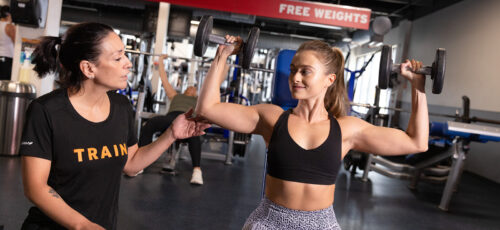
If you want to get more out of your bicep workouts, a Crunch Fitness trainer can help you improve your form, stay motivated, and get better results.
Let’s begin!
Starting with bicep exercises is simple. Focus on good form, build up slowly, and let your body recover. Whether you want bigger muscles or a stronger upper body, being consistent is more important than making things complicated.
The five exercises in this guide mix compound and isolation moves, giving you a balanced way to train your biceps and supporting muscles. For example, a beginner might start with light dumbbell curls and cable curls, focusing on control instead of speed.
Begin with a weight you can lift comfortably and increase it over time. This is the key to building strength. As you get stronger, slowly add more weight or reps to keep growing muscle, but always keep good form.
Pay close attention to your range of motion. In a bicep curl, fully extend your arms at the bottom and squeeze at the top to get better muscle activation. Slow, controlled reps work better than fast, sloppy ones.
If you’re just starting out, learn the basics before moving on to advanced techniques like drop sets. Remember, your muscles grow during rest days, so don’t skip recovery.
For more tips, take a look at this guide on arm strength exercises that help build size and power.
If you want your arms to grow, your bicep exercises should do more than just feel tough. They need to work your biceps from different angles and in different ways. The five exercises below are chosen to help you build bigger, stronger arms in every area.
Some exercises help you lift heavier and build muscle, while others improve control and shape. By mixing compound and isolation moves, you work your biceps and important supporting muscles like the brachialis and brachioradialis.
Add these exercises to your pull day and stick with your training. Over time, you’ll build stronger, more balanced arms.
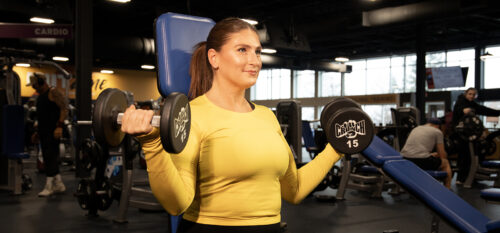
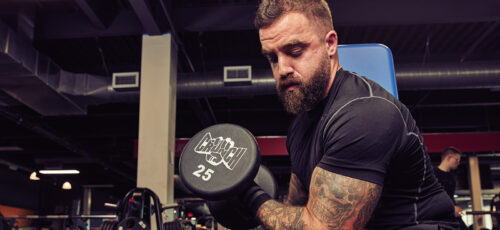
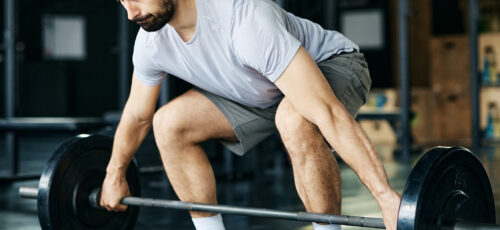
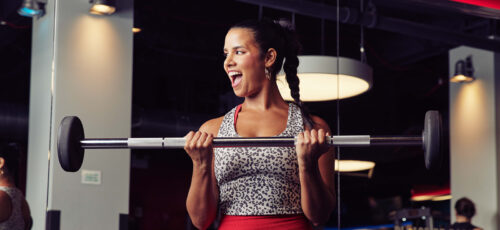
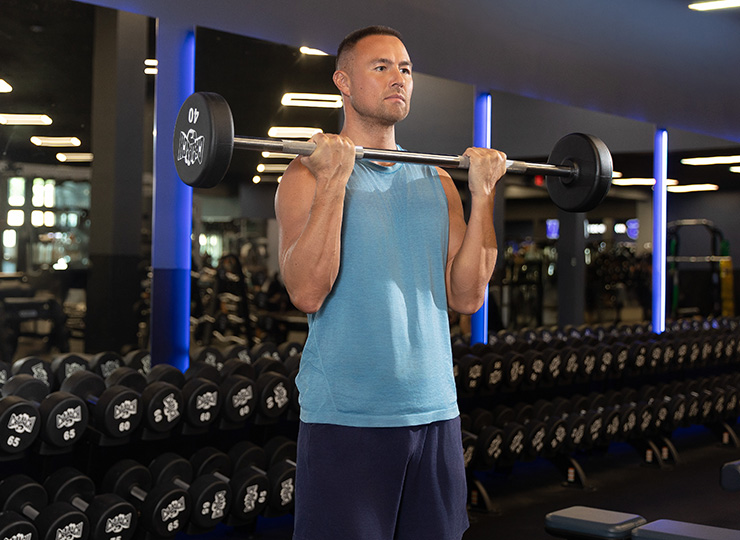
Barbell curls are a basic exercise for building size. They let you gradually increase the weight and build real strength.
How to do it:
Tips:
Hammer curls help make your arms thicker by working deeper muscles like the brachialis.
How to do it:
Tips:
This exercise focuses on stretching and control, which helps build the peak of your biceps.
How to do it:
Tips:
Cable curls are one of the best bicep exercises with cables because they keep steady tension on your muscles.
How to do it:
Tips:
Concentration curls are great for isolating your biceps and improving your mind-muscle connection.
How to do it:
Tips:
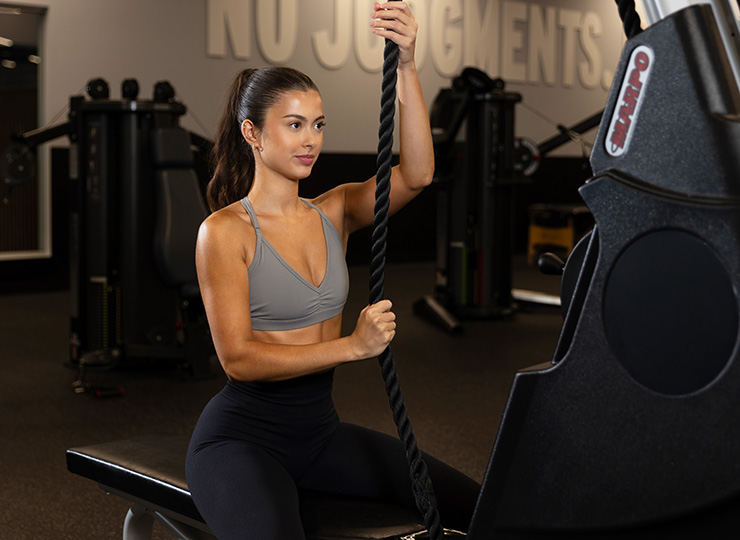
Your biceps make up a big part of your upper arm, so they affect how your arms look and work. Strong biceps not only look good, but also help with big movements like rows and pull-ups, making your strength training better overall.
Think about everyday movements like carrying groceries or lifting a suitcase; your biceps are constantly working. That’s why consistent bicep exercises for bigger arms can improve both gym performance and daily strength. Balanced training also helps reduce strain on your joints, supporting elbow health and preventing overuse injuries.
But building strong arms isn’t just about curls. A good routine should also include exercises for your triceps and forearms to help your arms grow fully. For more tips, check out this resource on getting bigger arms.
To get the best results from your bicep exercises, it helps to know what muscles you’re working. Your arms use several muscles together for strength and control during moves like bicep curls.
Here’s a simple breakdown:
These muscles work together to bend your elbow and turn your forearm, like when you turn your palm up. That’s why it’s important to use different exercises and grips, like dumbbells and cables, to target all parts of your biceps.
Adding the best bicep exercises to your routine helps you build muscle evenly and avoid imbalances as you get stronger.
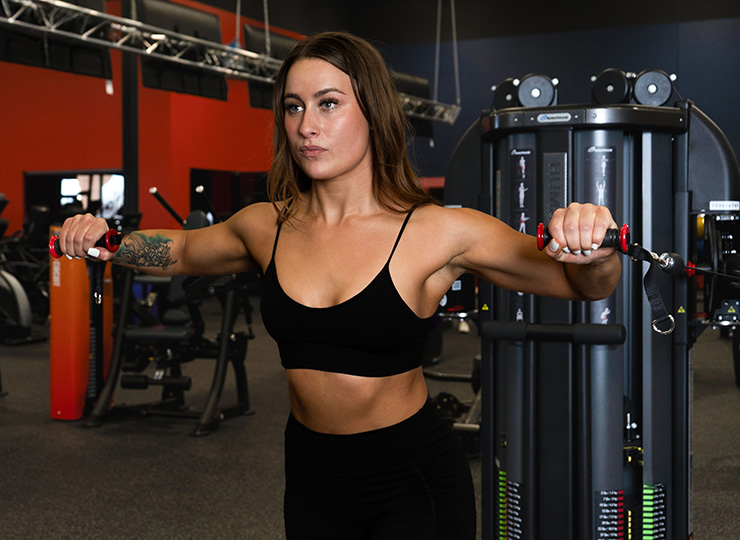
If your current routine isn’t working, it might be time to change how you train your biceps. If your arms aren’t growing even though you’re working out regularly, it’s a sign you need to try something new.
Other signs include getting stuck with your bicep curls, using momentum instead of control, or seeing that one arm is stronger than the other. If your elbows hurt, it could mean your form needs work, your weights are too heavy, or you’re overdoing it.
For example, if you swing the weights instead of controlling them, you won’t work your muscles as well, and your results will suffer. To get back on track, try improving your form, doing more sets or reps, or adding new exercises.
If you’re not sure where to begin, a Crunch Fitness trainer can look at your routine and help you find the best bicep workout for growth. You can also check out this guide on arm workouts for more ideas.
Here are some tips to help you get the most from your bicep exercises and keep growing over time:
A good routine has structure, not just random bicep exercises. Train your biceps 2–3 times a week, doing 10–20 sets each based on your experience.
Start your workout with heavier compound moves like barbell curls, then do isolation exercises like incline dumbbell curls or cable curls. Beginners can do 2–3 exercises with 3 sets each. If you’re more advanced, try 4–5 exercises with different rep ranges and intensity.
For example, you might start your workout with heavier curls and finish with lighter, high-rep exercises for a good pump. This approach helps you build both strength and muscle.
You can train biceps on pull days or with your upper-body workouts, pairing them with back exercises. Rest for 60–90 seconds between sets and make sure to recover so your muscles can rebuild.
For more ideas, check out upper body strength exercises and a complete workout routine.
Sometimes, the problem isn’t what exercises you do, but how you do them. Common mistakes in bicep workouts can slow your progress or even cause injuries.
A big mistake is lifting too much weight and losing good form. If you swing the weights or use momentum, your biceps don’t work as hard. Doing only partial reps is also a problem because it limits your range of motion and muscle growth.
Training too often without enough rest can hurt your progress. Muscles grow when you rest, not just when you work out. Overtraining can cause plateaus or make your elbows hurt.
Another mistake is ignoring your triceps and forearms, which are important for balanced arm growth.
A Crunch trainer can help you fix these problems, improve your technique, and create a better plan. Learn more about the benefits of working with a trainer here: Is a personal trainer worth it?
Your results from bicep exercises depend on more than just your workouts. Nutrition is a big part of building muscle.
To build muscle, try to eat about 0.8 to 1.2 grams of protein for every pound you weigh (convert your bodyweight to kilograms for the most accurate calculation). Protein helps your muscles repair and grow after tough workouts. You also need enough calories to support growth, either by eating a bit more or maintaining your weight, depending on your goals.
Carbohydrates provide the energy needed for effective workouts and recovery, while hydration supports performance and prevents fatigue. After training, a balanced meal with protein and carbs can help speed up recovery and improve results.
Put simply, your workouts start the process, but your nutrition is what helps you see results.
If you’re not sure where to begin, Crunch trainers can help you with easy, lasting nutrition tips. You can also check out this guide on balanced nutrition for more ideas.
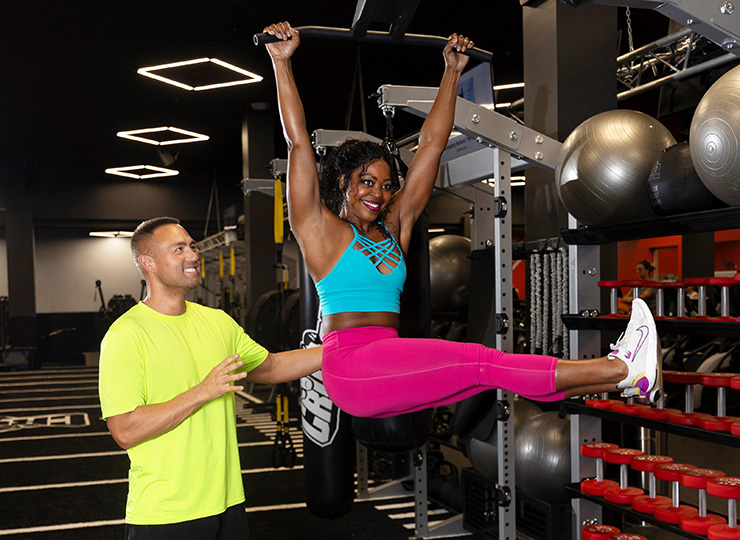
To build stronger, more defined arms, you need the right environment and support. Crunch Fitness offers expert coaching, a variety of equipment, and a motivating community to help you get the most from every workout.
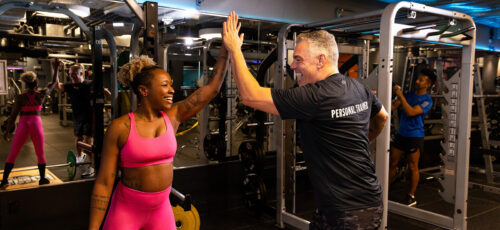
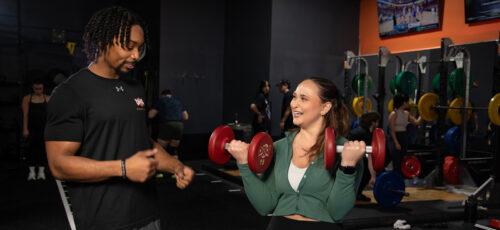
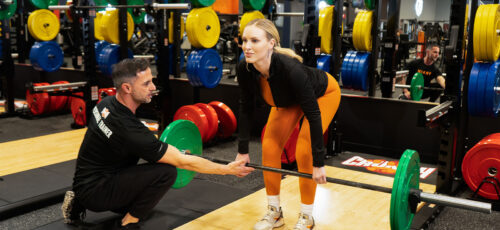
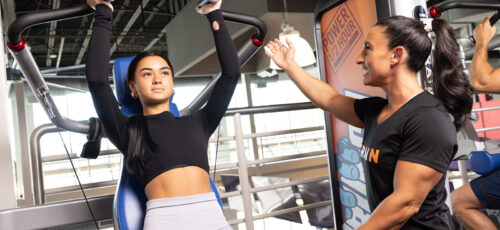
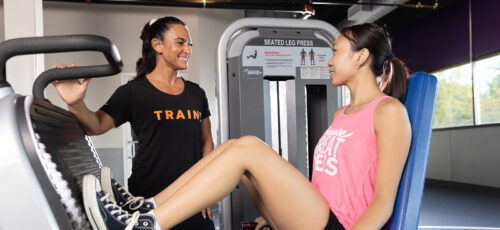
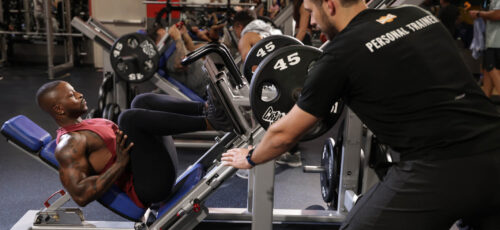
Crunch’s certified personal trainers help you get more from every rep by focusing on proper form and effective muscle activation. They check your current strength and make a plan that fits your goals, whether you want to build mass, get more defined, or get stronger.
With real-time feedback, you’ll learn to do bicep curls the right way, avoid mistakes like swinging, and keep up with your training. As you improve, your program will change with you to help you keep growing and see better results.
Learn more about customized plans here: Do Personal Trainers Create Customized Workout Plans?
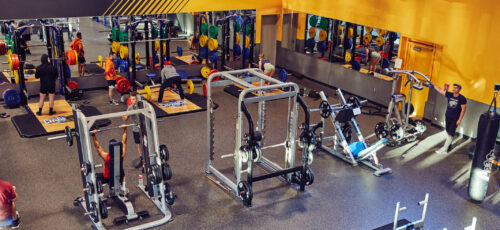
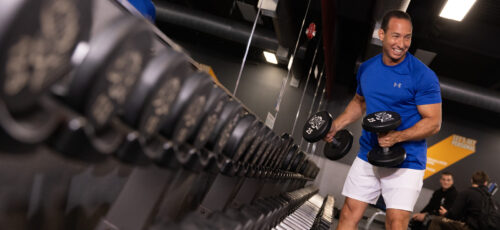
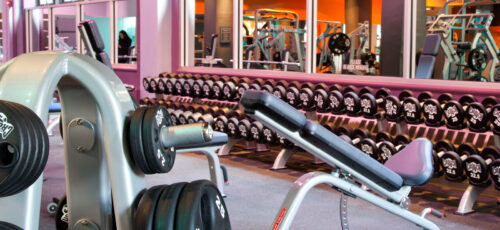
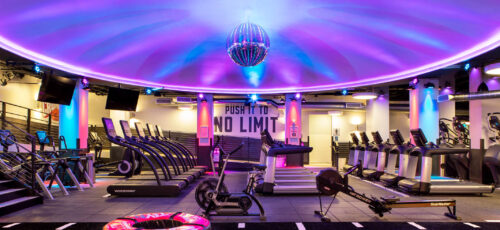
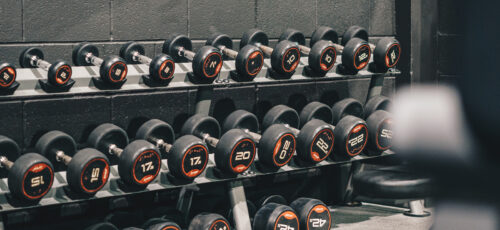
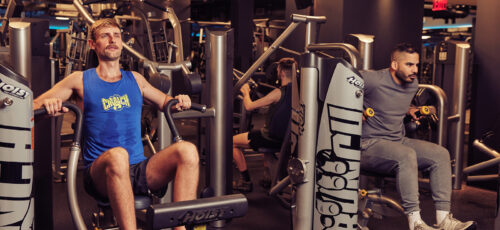
Crunch has all the equipment you need for great bicep workouts. You’ll find dumbbells, barbells, EZ curl bars, cable machines, and special benches so you can train your arms from every angle.
With lots of weights to choose from, you can keep challenging your muscles as you get stronger. Cable machines give steady tension for better growth, and benches like incline and preacher benches help you target different parts of your biceps, so your workouts stay effective and interesting.
Explore available equipment here: What Equipment Does Crunch Fitness Provide?
Staying consistent is important, and Crunch helps you stick with your goals. The supportive, No Judgments atmosphere lets you focus on your form and progress, not on comparing yourself to others.
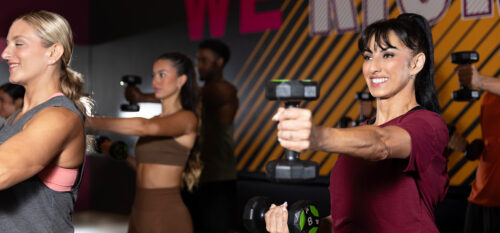
Watching others work toward their goals can motivate you, and group fitness classes add variety and help build your upper body strength. Whether you train alone or with others, the community makes your workouts more fun and easier to stick with.
Discover the benefits of group training here:The Powerful Benefits of Group Exercise Classes for Every Fitness Level
Crunch promotes a culture of positivity, inclusivity, and fun with no judgments by providing an environment for all individuals, regardless of their health and fitness goals. Find a Crunch gym near you to try our free trial membership, or join Crunch now. We’re here for you – at the gym or at home. Access the best live & on-demand workouts anytime, anywhere with Crunch+. Ready to get sweaty? Try hundreds of workouts for free! Start your free trial now!
Try training your biceps two or three times a week for the best results. This gives your muscles enough work and also time to recover, which is when they grow.
If you stick with your bicep workouts and eat well, you might notice changes in about four to eight weeks. Bigger size gains usually take a few months of steady strength training.
Try to do 10 to 20 sets for your biceps each week, with 8 to 12 reps in each set. This helps you build both strength and muscle size, especially if you use good form and keep challenging yourself.
No, you shouldn’t train your biceps every day. They need time to rest and grow. If you overdo it, you might feel tired, stop making progress, or even get hurt.
Exercises like rows and pull-ups work your biceps, but usually not enough for the best growth. Doing extra bicep exercises helps you focus on the muscle and build more size.
It’s efficient to train your biceps with your back since you use them during pulling exercises. But you can also work them on a different day if you want to give them more attention.
No, curls matter, but if you only do curls, your results might be limited. Mixing different exercises, both compound and isolation moves, helps your biceps grow better overall.